Author: webmaster-4201 (Page 1 of 5)

Station 43 Wildlife Sanctuary

Station 43 Wildlife Sanctuary

Station 43

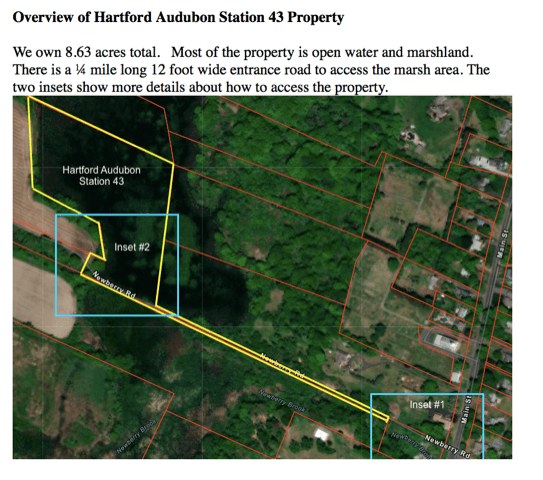
Station 43 comprises about 9 acres of shallow pond and marsh, bordered by over 400 acres of wetland, meadows, and active farmland on our south, west, and north boundaries, and by 100 acres of wooded higher ground to the east.

Located below the 20 ft elevation contour in the Connecticut River flood plain in South Windsor, this is one of the most productive inland bird watching sites in Connecticut and is a Special Focus Area of the Silvio Conte NFWR. Additionally, the area has been designated as an Important Bird Area by the National Audubon Society. Ten Endangered, nine Threatened and nine Special Concern bird species have been reported here, among 240 total bird species.

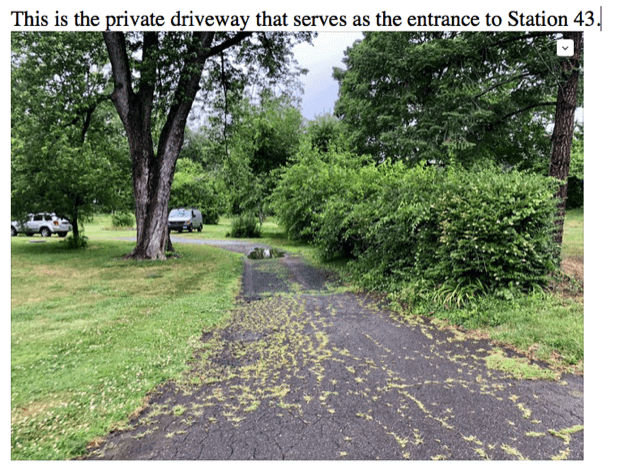
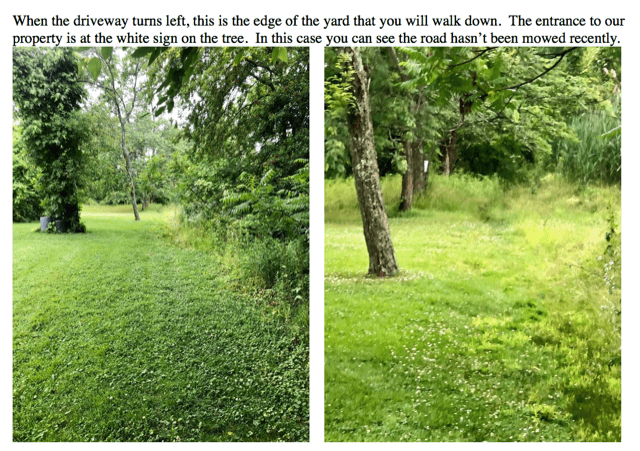
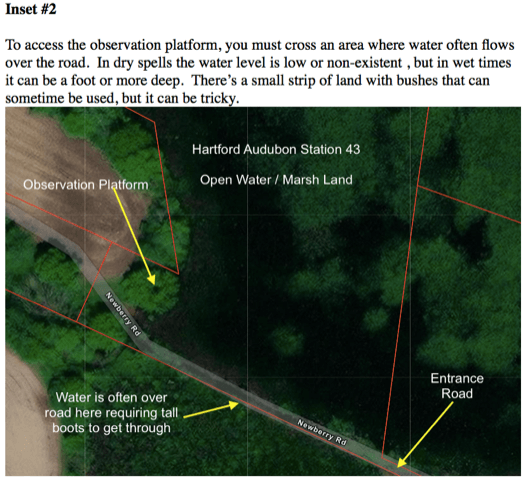
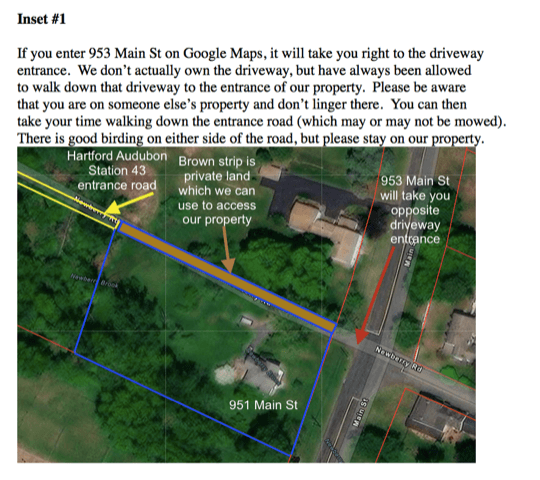
The trail entrance to Station 43 is directly opposite where Newberry Road intersects Main Street in South Windsor.  Park on the west side of Main Street (please don’t block any driveways or mailboxes) and walk west from the intersection on what starts as a rutted driveway and quickly turns into a trail.  Follow the trail out to the pond and observation deck.  Our property ends with the observation deck.

A few things to prepare for your walk. Bug repellent is recommended in warmer months.   Many areas of the path are wet and muddy, especially at the pond area where water can be up to 12 inches deep. High, fully waterproof boots are required to make it to the platform most of the time. Hunting is not allowed on the Station 43 property but does legally occur on adjacent properties. Most hunters are required to wear fluorescent orange, all visitors are encouraged to do the same thing during hunting seasons (Sept – Feb, but not on Sundays).

Do not use recording devices to call the rails, Sora’s or any other birds that have chosen Station 43 for the “critical” purpose of nesting. You most likely hear them call as they are trying to attract a mate. You may also get lucky and see them walk the trail.

If you see any trash (which is not often) please, pick it up. Always be respectful of other birders. Keep fast moves and noise at a minimum.
PastedGraphic-10
PastedGraphic-11
PastedGraphic-12
PastedGraphic-13
PastedGraphic-14

Recent bird sightings from Station 43:

Station 43 eBird Hotspot

Lewis Farm Bird Sanctuary

Lewis Farm Bird Sanctuary

Lewis Farm entrance

Almost 90 acres of former farmland that has been reverting to woodland for four or five decades. Mostly wooded, traversed by a stream emerging from a wetland and with a small pond in another low area, it lies at about 150 ft elevation in central Suffield, CT. The entrance roadway is at 1035 Hill Street, about 2 miles north of Route 168. Watch for the sign beautifully restored by Sally Markey. (removed October 25 – to – April 30) Park on the east side of Hill Street, just off the roadway surface, and walk into the sanctuary. There is a trail map on a signboard where the entrance road opens into a grassy area with benches. We have a long-term forest management plan to guide our habitat improvement efforts. Insect repellent is recommended in summer.

Lewis Farm Map

Greenstone Hollow

Greenstone Hollow Nature Preserve

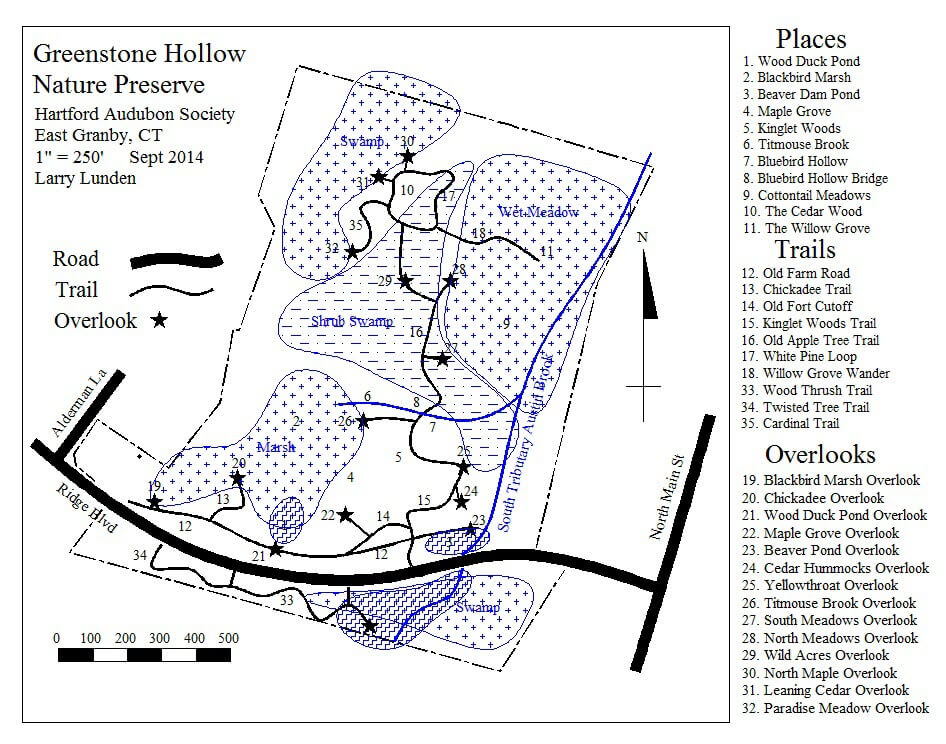
This East Granby property is 38 acres in size. Ridge Boulevard runs through the south part of the preserve and provides 5 entrances to trails on the property. The 2 plus miles of named trails are clearly marked with trail signs including maps that can be photographed by the two north entrances.

There are also benches at various overlooks throughout the property which can be used for resting while walking the trails, or as a destination to sit and watch the birds for a while from one spot.  One of those benches is located at the butterfly garden and bluebird house project maintained by club volunteers.

Greenstone is a property with diverse habitats including shrubby fields, a dense shrub layer, red cedars and white pine, hardwood forest, cattail marsh, a large beaver pond, and a perennial stream with a shrubby shore. The preserve is in the 100 year flood zone and is crossed by the South Tributary of Austin Brook. This is an abandoned farm field in forest succession. Parts of the interior are left for undisturbed wildlife habitat with no trails. It is surrounded by residential development and farm fields.

Larry Lunden and Chris Fisher along with help from many club member volunteers have been active in creating and maintaining trails and cleaning up the property over the last several years.

Hartford Audubon bird walks are held 2 to 3 times each year and those walks along with regular visits by both club members and other birders have made it a hotspot on eBird with more than 130 reported species.

If you have any questions regarding this sanctuary, please contact Chris Fisher at chrisf001@aol.com or Larry Lunden at larrylunden@hartfordaudubon.org


Greenstone Hollow map

Feather Atlas

Feather Atlas

Edit

Welcome to the Feather Atlas!

Feather AtlasNow with enhanced identification tools and mobile optimization!

THE FEATHER ATLAS is an image database dedicated to the identification and study of the flight feathers of North American birds. The feathers illustrated are from the curated collection of the National Fish and Wildlife Forensics Laboratory.

Birds and Birding

Birds and Birding

Gardenscaping For Birds

Gardenscaping for Birds

Connecticut Native Plants to Attract Native Birds

Click here to access and utilize a comprehensive website for native plants:

https://www.audubon.org/plantsforbirds

  • Northern Arrowwood (viburnum dentatum): Blue-headed vireo
  • Highbush Blueberry (vaccinum corymbosum): Eastern Bluebird
  • Lowbush Blueberry (vaccinium angustifium): Eastern Towhee
  • Eastern Red Cedar (juniperus virginiana): Yellow-rumped warbler
  • Red Chokeberry (aronia arbutiolia): Brown Thrasher
  • Flowering Dogwood (cornus florida): Baltimore Oriole, Swainson’s Thrush, Scarlet Tanager
  • Gray Dogwood (cornus racemosa): Eastern Kingbird
  • Silky Dogwood (cornus amomum): Gray Catbird
  • Elderberry (sambucus canadensis): Northern Cardinal
  • American Holly (ilex opaca): Hermit Thrush
  • Shadblow Serviceberry (amelanchier canadensis): Rose-breasted Grosbeak
  • American Cranberrybush Vibiurnum (viburnum trilobum): Cedar Waxwing
  • Witherod Viburnum (viburnum cassinoides): Veery
  • Winterberry (ilex verticillata): American Robin

Recommended Reading

  • Bringing Nature Home – How You Can Sustain Wildlife with Native Plants (Douglas W. Tallamy)
  • The Audubon Society Guide to Attracting Birds – Creating Natural Habitats for Properties Large and Small (Stephen W. Kress)
  • Native Plants of the Northeast – A Guide for Gardening & Conservation (Donald J. Leopold)
  • Native Alternatives to Invasive Plants (Brooklyn Botanic Garden)
  • Native Shrubs for Landscaping (Connecticut College Arboretum)

Web Resources

« Older posts

© 2026

Theme by Anders NorenUp ↑